
What Are Vertebrates and Invertebrates? Differences and examples

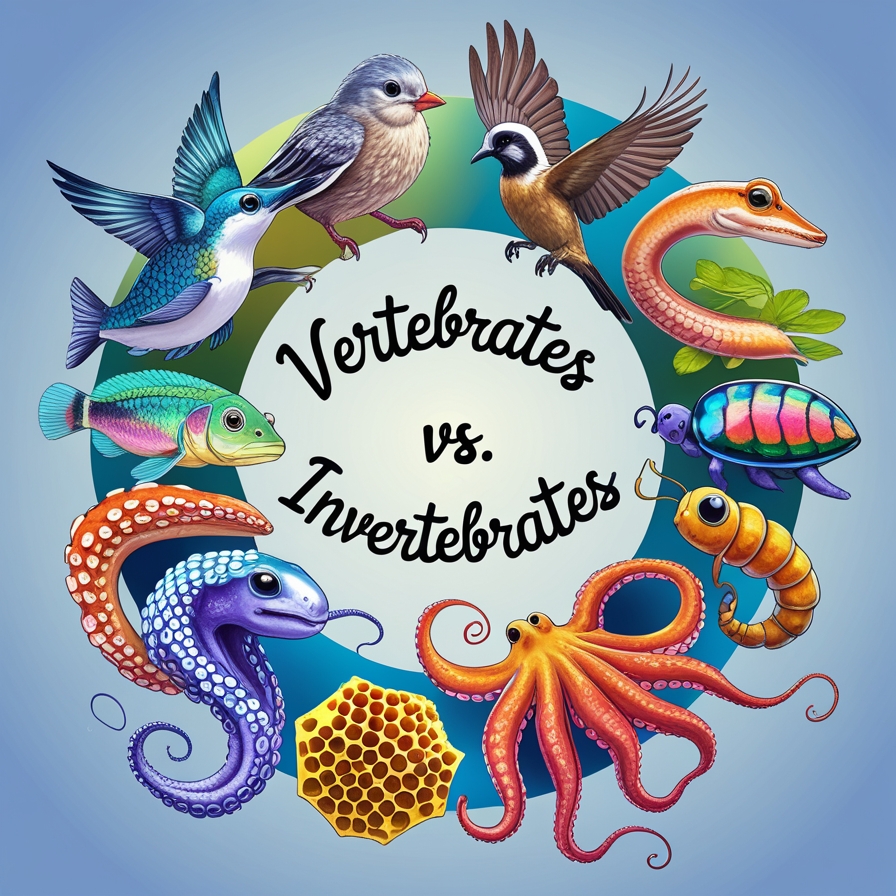
The animal kingdom is divided into two main categories: vertebrates and invertebrates. These classifications are primarily based on the presence or absence of a bony structure called the backbone, which is one of the main distinguishing features between these two groups of animals. In this article, we will explore the key differences between vertebrates and invertebrates, along with representative examples of each, to better understand how living beings are grouped and their importance in ecosystems.
What are Vertebrates?
Vertebrates are animals that have a backbone or spinal column made up of vertebrae. This feature provides structural support and greater protection for the nervous system, especially the spinal cord. Vertebrates belong to the phylum Chordata, a group characterized by the presence of a notochord, a flexible structure that, in vertebrates, is replaced by the backbone.
Vertebrates are divided into five main classes, each including a variety of species adapted to different environments and ways of life. These classes are:
- Fish: Fish are aquatic animals, mainly with gills that allow them to extract oxygen dissolved in water. Their bodies are covered by scales, and most have a tail fin for swimming. Fish include both marine and freshwater species, such as salmon, tuna, and trout.
- Amphibians: Amphibians, such as frogs, toads, and salamanders, can live in both aquatic and terrestrial environments. They often spend part of their life in water as larvae and later adapt to land as they mature.
- Reptiles: Reptiles, including snakes, lizards, and turtles, are cold-blooded animals with scales that usually lay eggs instead of giving live birth. They are adaptable to various habitats, from deserts to tropical forests.
- Birds: Birds are warm-blooded animals with feathers and wings, and most are capable of flight. Their highly specialized respiratory system and migratory abilities are fascinating features. Common examples include eagles, penguins, and parrots.
- Mammals: Mammals are warm-blooded animals that have mammary glands to feed their young with milk. They include a wide range of species, from tiny bats to giant whales. Mammals are known for their habitat diversity, ranging from land to oceans.
What are Invertebrates?
Invertebrates, as their name suggests, are animals that lack a backbone. Despite this absence, invertebrates represent approximately 95% of all known animal species. Invertebrates are found in a wide range of environments, from oceans to tropical forests and deserts. The lack of a backbone is compensated by other features that allow them to survive and thrive in their respective habitats.
Invertebrates are divided into several groups, the most well-known include:
- Arthropods: Arthropods are the most numerous and diverse group of invertebrates. This group includes insects, spiders, crabs, and lobsters. They have an exoskeleton made of chitin, which provides support and protection. Insects are the largest subgroup, with species such as bees, butterflies, beetles, and ants.
- Mollusks: Mollusks have soft bodies often protected by hard shells. Examples include snails, mussels, squids, and octopuses. Mollusks play a particularly important role in marine and freshwater ecosystems.
- Echinoderms: Echinoderms include marine animals such as starfish, sea urchins, and sea cucumbers. Despite their spiny appearance, echinoderms have a radial symmetry system that allows them to move and feed efficiently on the ocean floor.
- Cnidarians: This group includes aquatic animals such as jellyfish, corals, and sea anemones. Cnidarians are known for their specialized cells called cnidocytes, which allow them to defend themselves and capture prey.
- Worms: Worms comprise a wide variety of species, from flatworms to segmented worms and roundworms. These animals play a vital role in decomposing and recycling organic matter on land and in water.
Key differences between Vertebrates and Invertebrates
Although vertebrates and invertebrates are both part of the animal kingdom, there are several notable differences between the two groups:
- Backbone: The main difference is the presence or absence of a backbone. Vertebrates have a backbone made of vertebrae that protects the spinal cord, while invertebrates lack this structure.
- Size and Complexity: Vertebrates tend to be larger and more complex than invertebrates. This is because the backbone provides greater support for growth and more organized internal systems.
- Nervous and Circulatory Systems: Vertebrates generally have a more advanced nervous system with a well-developed brain, while invertebrates, although simpler, have evolved adaptive ways of communicating and coordinating survival.
- Exoskeleton vs. Endoskeleton: Vertebrates have an internal skeleton (endoskeleton), whereas many invertebrates, like insects and crustaceans, have an external skeleton (exoskeleton) that provides protection and support.
- Reproduction: Vertebrates usually reproduce sexually with internal fertilization (except in some groups like fish), while invertebrates have diverse reproductive strategies, including external fertilization (in many mollusks and fish) or parthenogenesis in certain insects.
Examples of Vertebrates and Invertebrates
Vertebrates:
- Fish: The tuna is an example of a vertebrate fish that inhabits the oceans and is known for its speed and endurance.
- Amphibians: The frog is a vertebrate amphibian that begins its life in water as a tadpole and develops to live on land.
- Reptiles: The sea turtle is a vertebrate reptile that spends most of its life in the water but requires land to lay its eggs.
- Birds: The golden eagle is a vertebrate bird that uses its flight skills to hunt prey over large areas.
- Mammals: The African elephant is a vertebrate mammal known for its impressive size and intelligence.
Invertebrates:
- Arthropods: The spider is a classic example of an invertebrate arthropod that uses its exoskeleton for protection.
- Mollusks: The octopus is an invertebrate mollusk renowned for its intelligence, camouflage abilities, and capacity to escape danger.
- Echinoderms: The starfish is an echinoderm that moves along the ocean floor and plays a key role in marine ecosystems.
- Cnidarians: The jellyfish is a cnidarian that uses its tentacles to capture prey and defend itself.
- Worms: The earthworm is an invertebrate that helps aerate the soil and facilitates the decomposition of organic matter.
Conclusion
Vertebrates and invertebrates are two fundamental groups in the animal kingdom, and their biological differences reflect adaptations to a wide variety of environments. While vertebrates, with their backbone, are typically larger and more complex, invertebrates display an astonishing diversity of forms and sizes, and their ability to survive in various habitats is remarkable. Both groups are essential for maintaining the balance of ecosystems, and studying them remains crucial for understanding biodiversity and the functioning of life on Earth.
This knowledge is not only fascinating but also vital for species conservation and the protection of our ecosystems.


